
Illuminating the Newly Completed Three-Story Pagoda (Tenryuzan Shogoji Temple)
Lighting Equipment
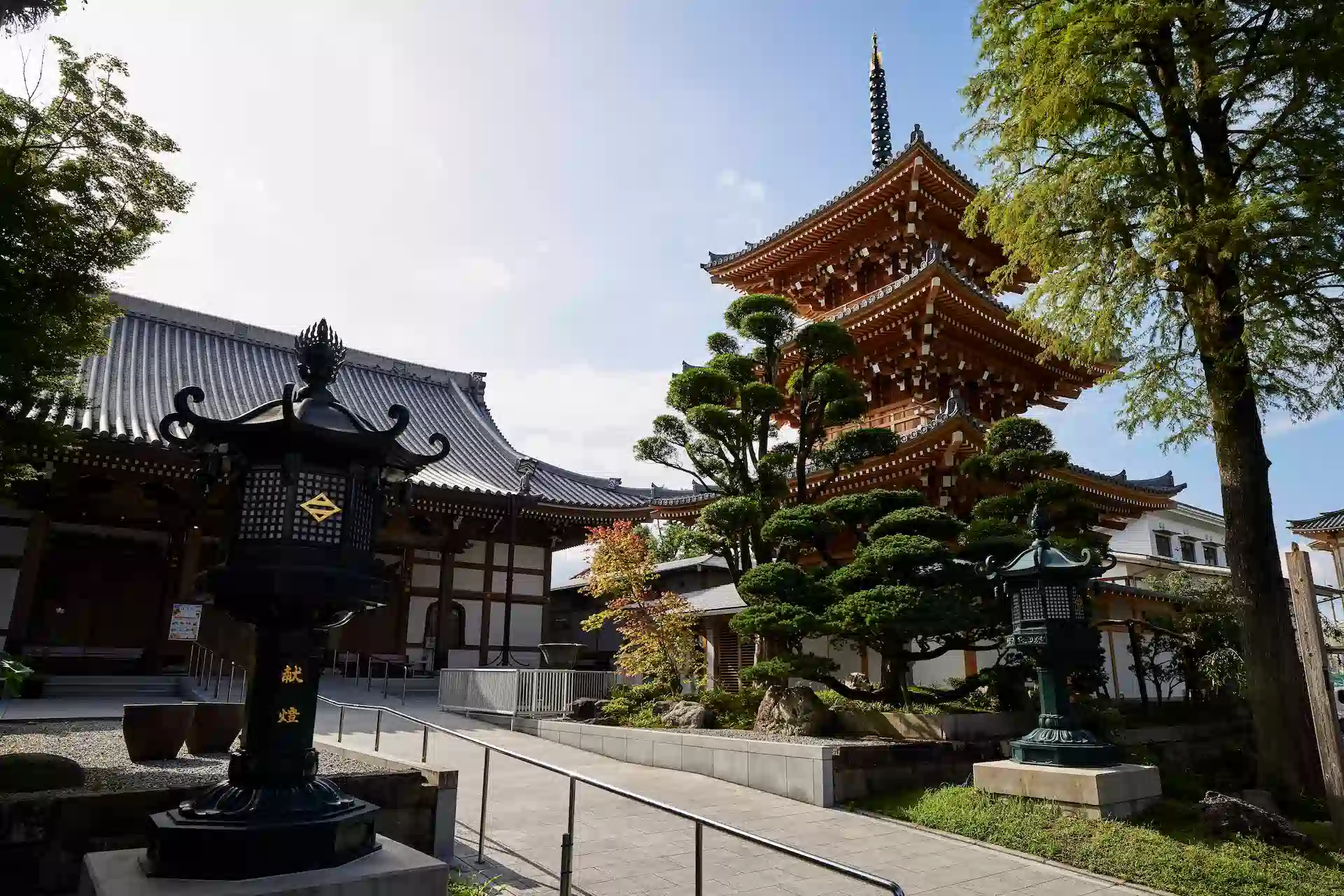
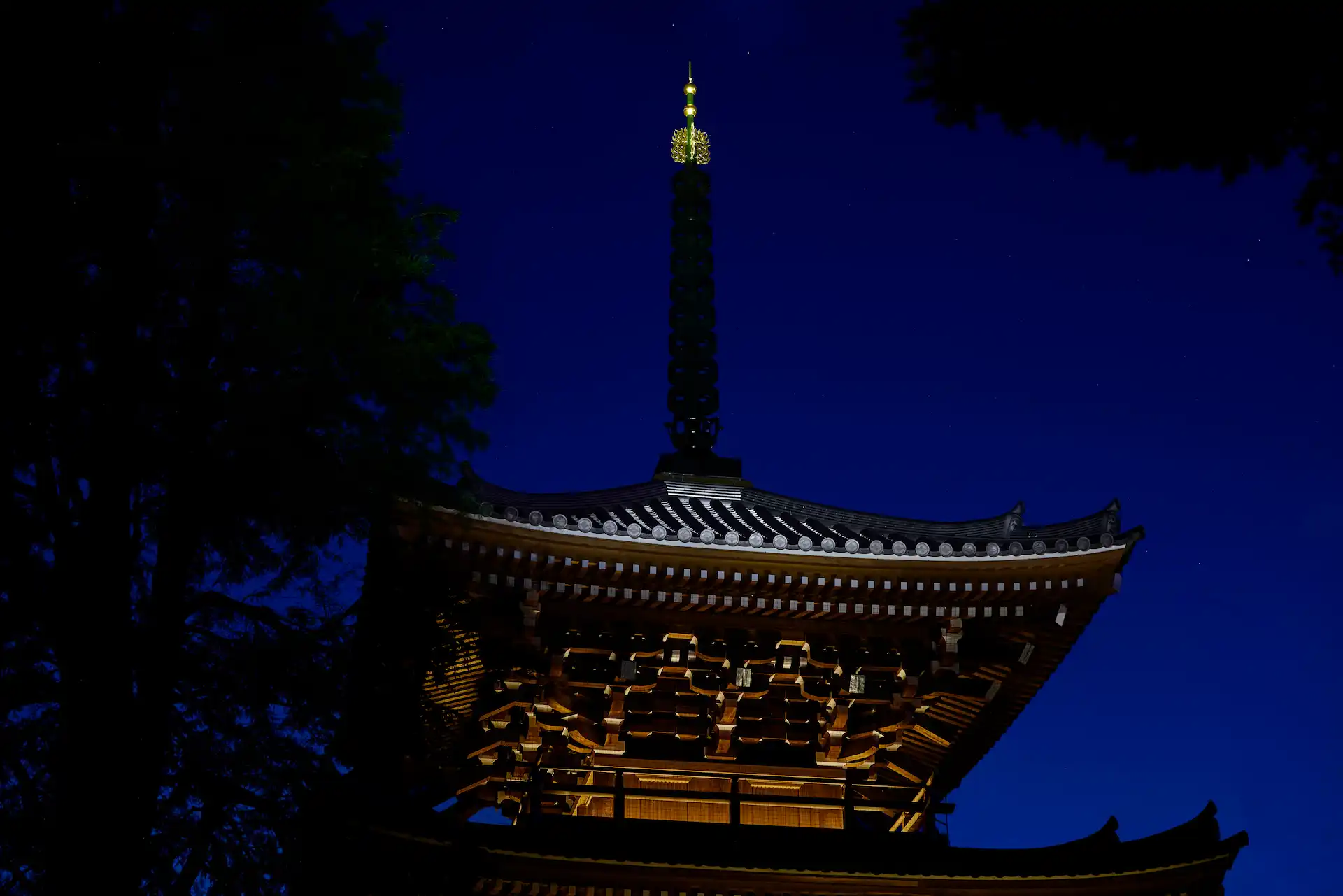
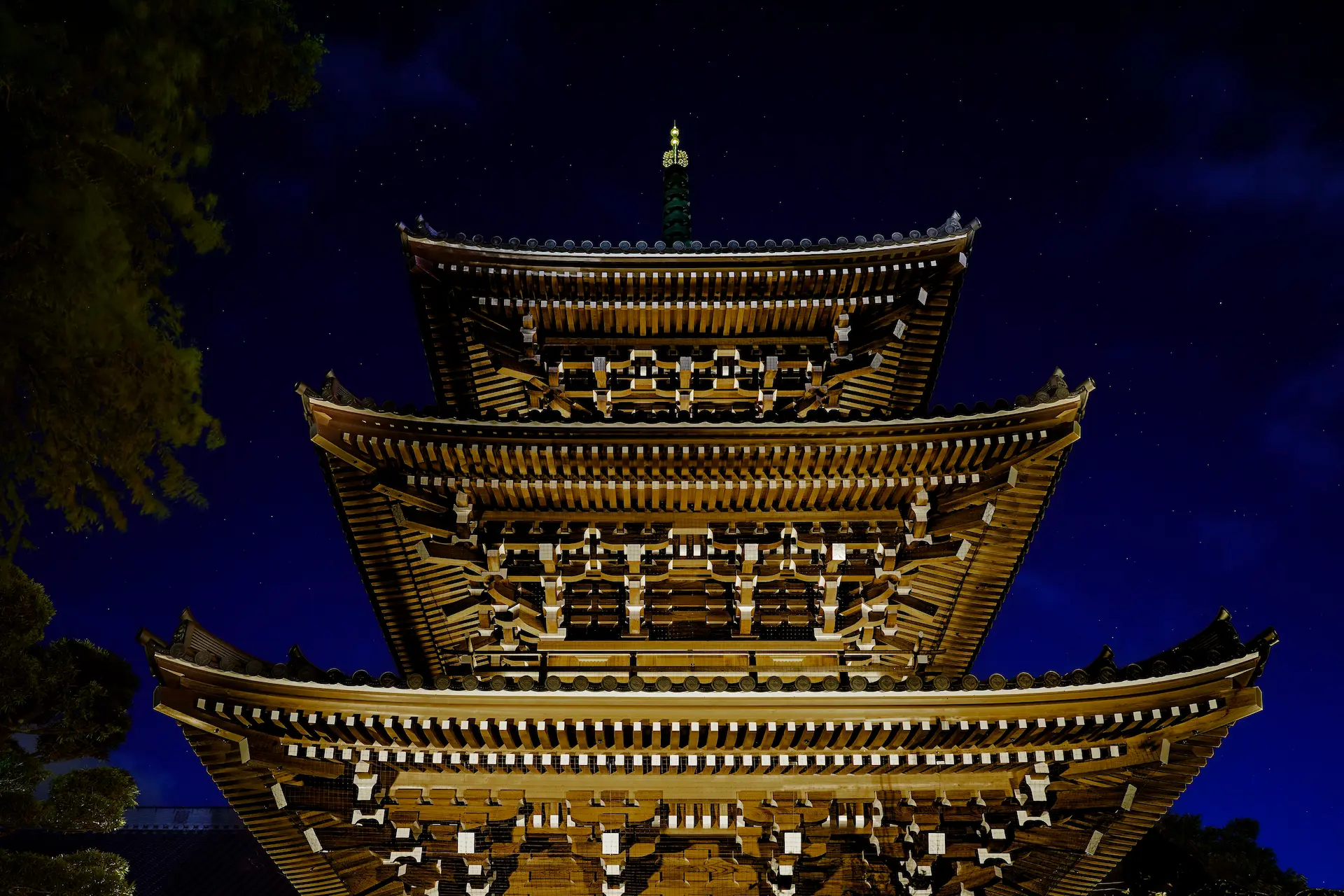
In May 2026, the newly completed three-story pagoda at Tenryuzan Shogoji Temple, a Jodo Shinshu Hongwanji-ha temple in Miyakonojo City, Miyazaki Prefecture, was illuminated.
For the past three years, Shogoji Temple has been illuminating the area around its temple gate.
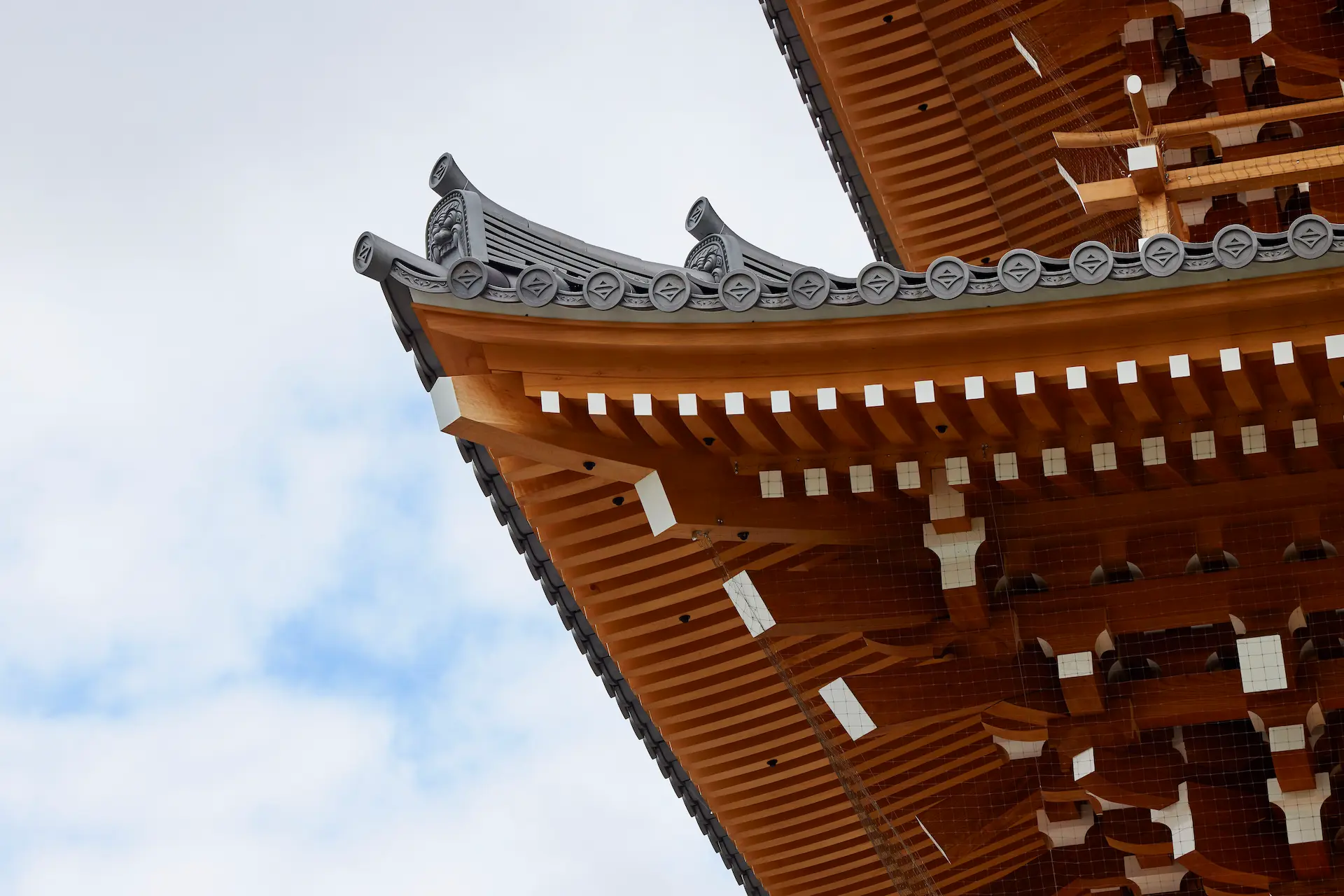
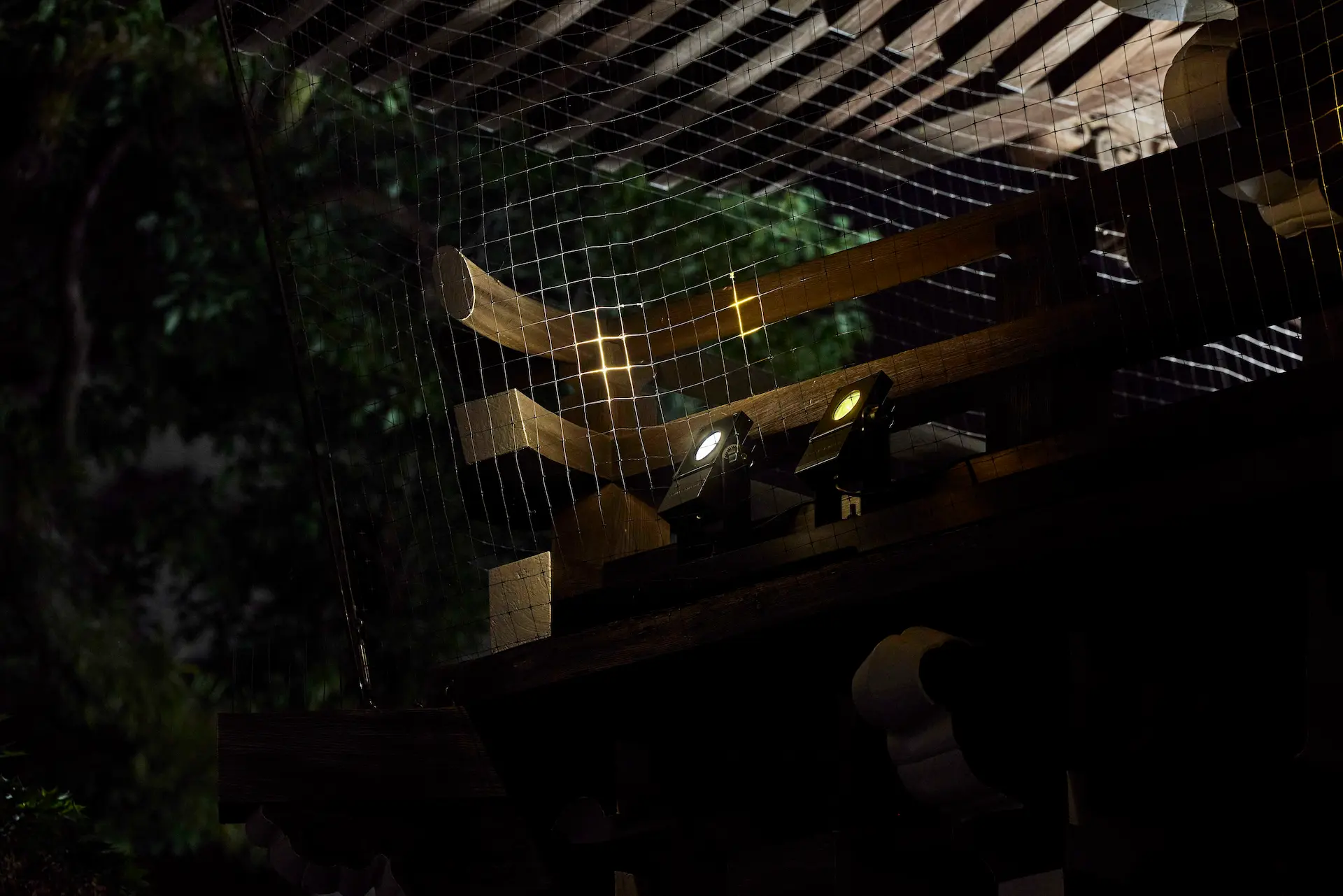
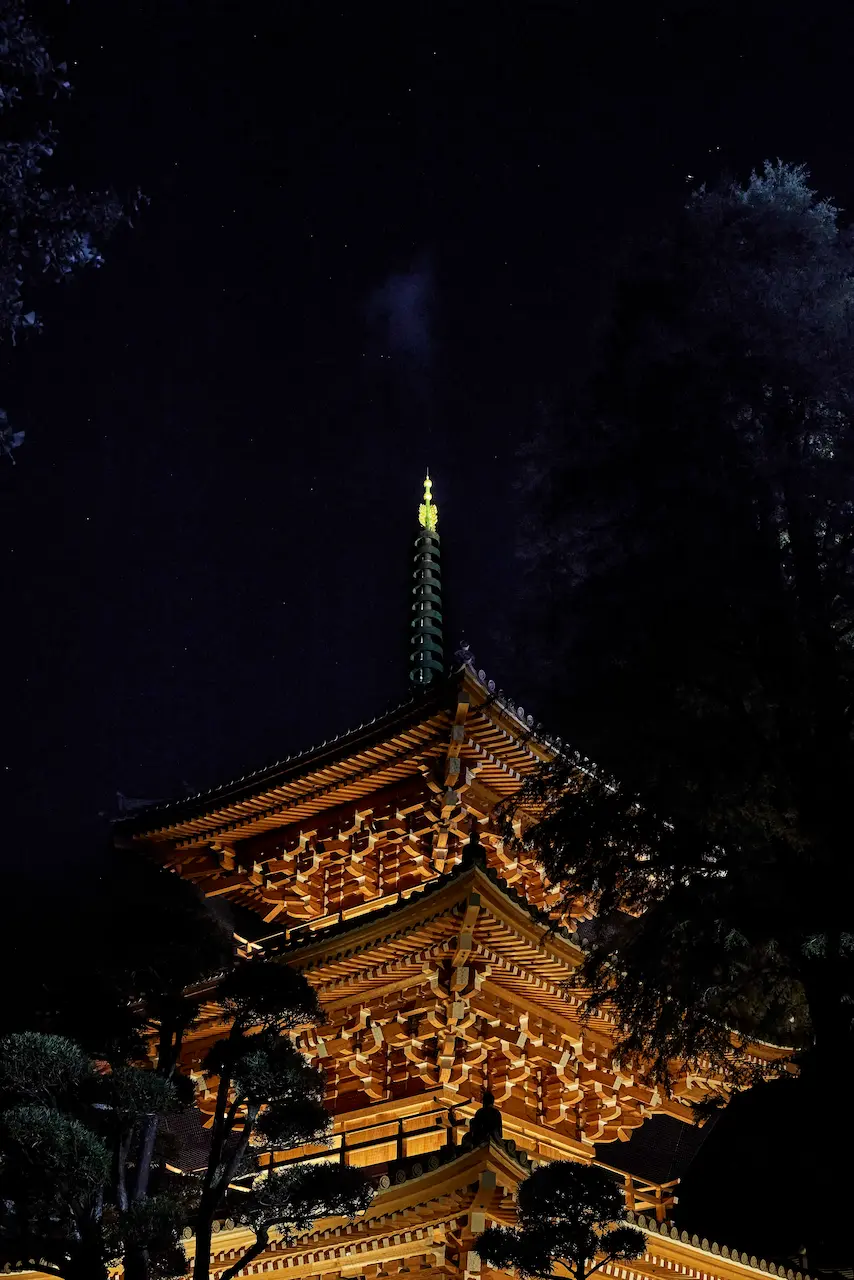
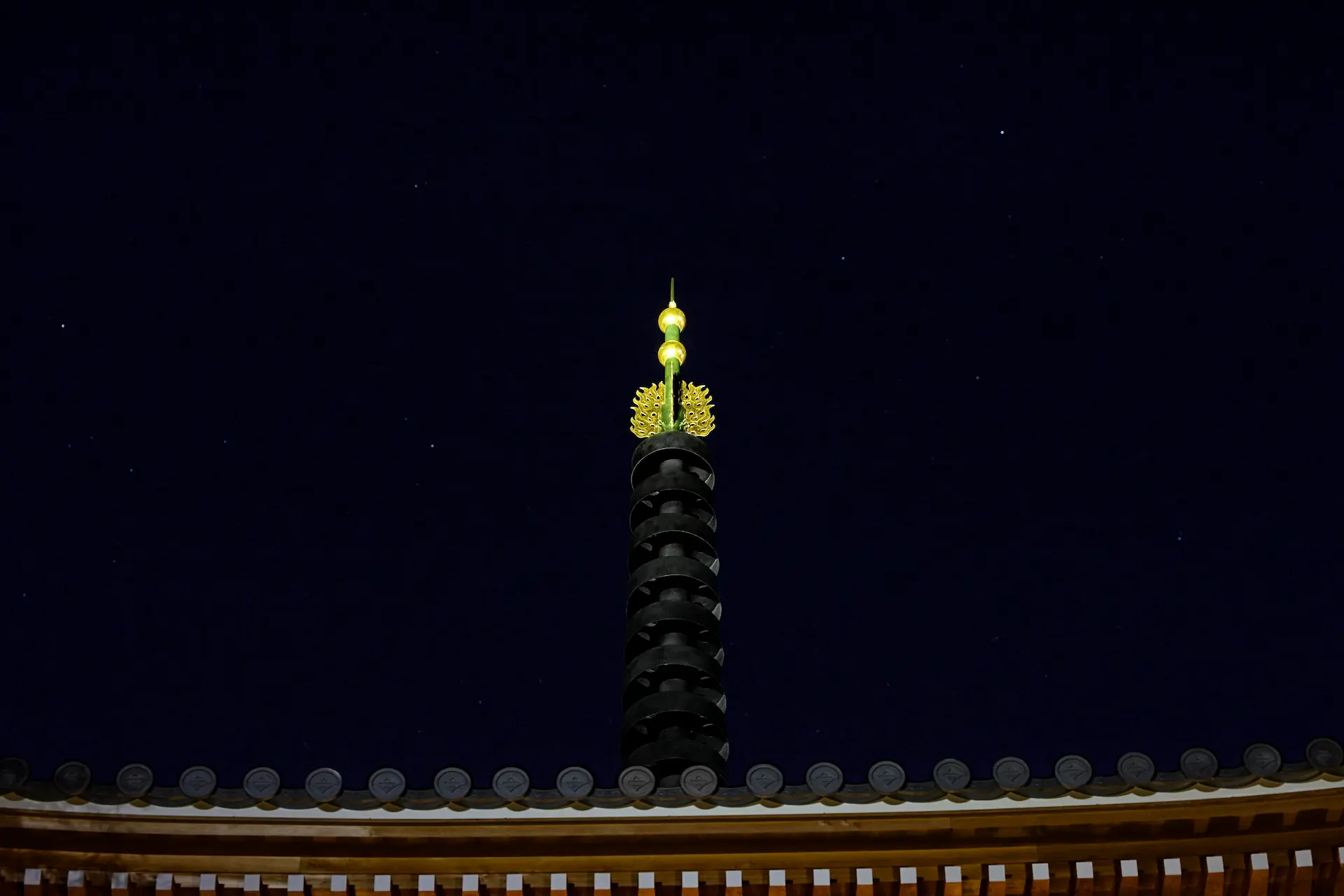
For the newly completed three-story pagoda, our floodlights illuminate the uppermost tiled roof with white light and the sorin, the ornamental finial at the top of the pagoda, with gold-colored light. The lighting gives the pagoda a striking presence at night.
We spoke with the head priest and the lighting designer about the process and vision behind the project, from planning to completion.
Application 1: Pinpoint Illumination of the Pagoda Finial
Product Name: LEDSFOCUS GOLD Gold Floodlight / LLF0113A
Number of units: 2; Beam angle: 2.5°
Application 2: Lighting of the Topmost Tile Roof
Product Name: LEDSFOCUS PRO White Floodlight / LLF0113A
Number of units: 2; Beam angle: 9°
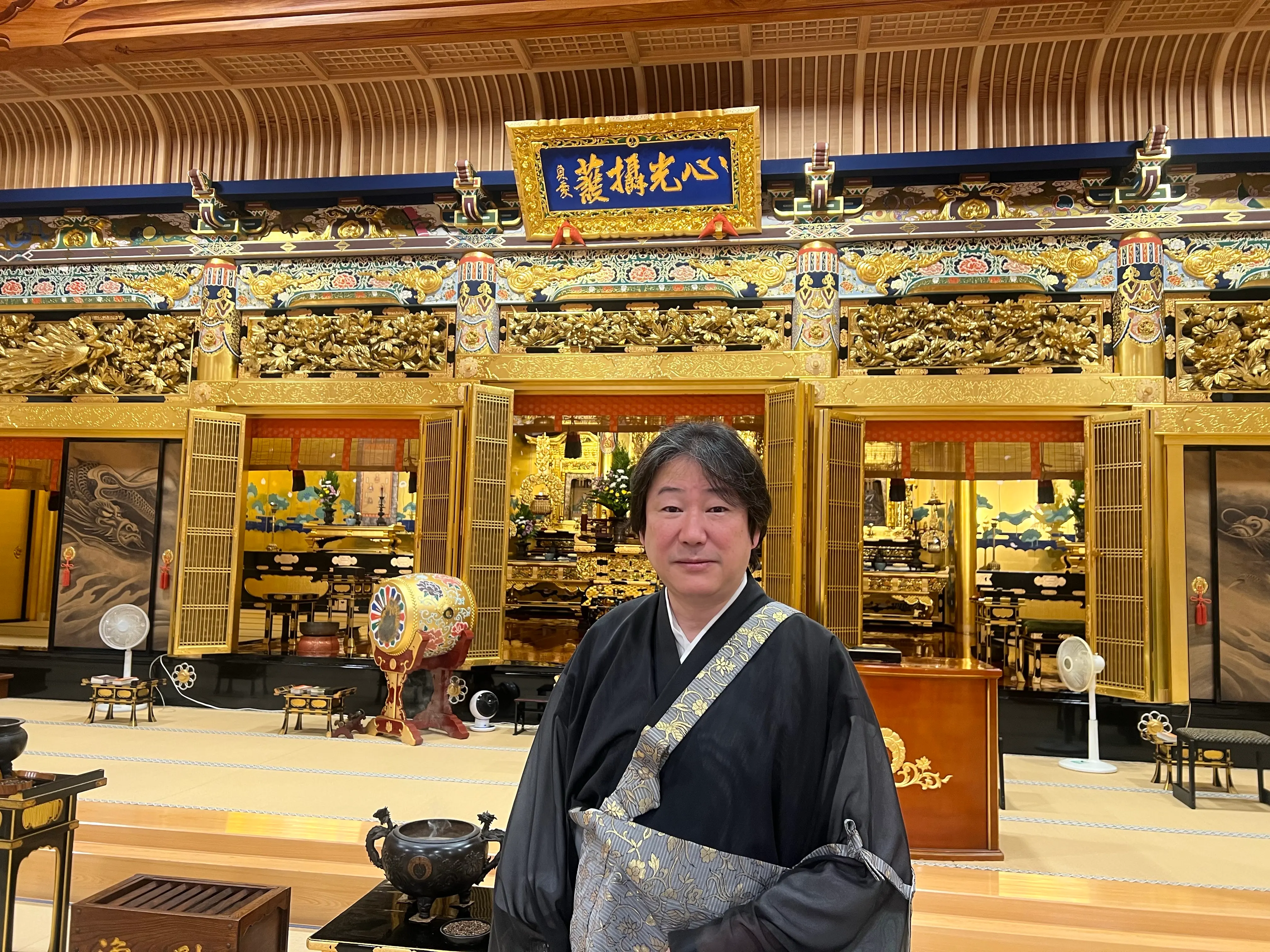
Head Priest
Thank you for coming all the way to Miyazaki.
Before illuminating the three-story pagoda, we began by lighting the street in front of the temple gate. Previously, there were no streetlights and hardly anyone passed by, so it was pitch black at night.
Since the previous head priest’s time, we had wanted to make the area brighter and create a place where people would feel welcome to stop by. That aspiration led us to undertake the lighting project.
If we were going to undertake the project, I did not want to simply install lights. I wanted to involve a lighting designer and develop the plan carefully, starting with the overall concept.
Head Priest
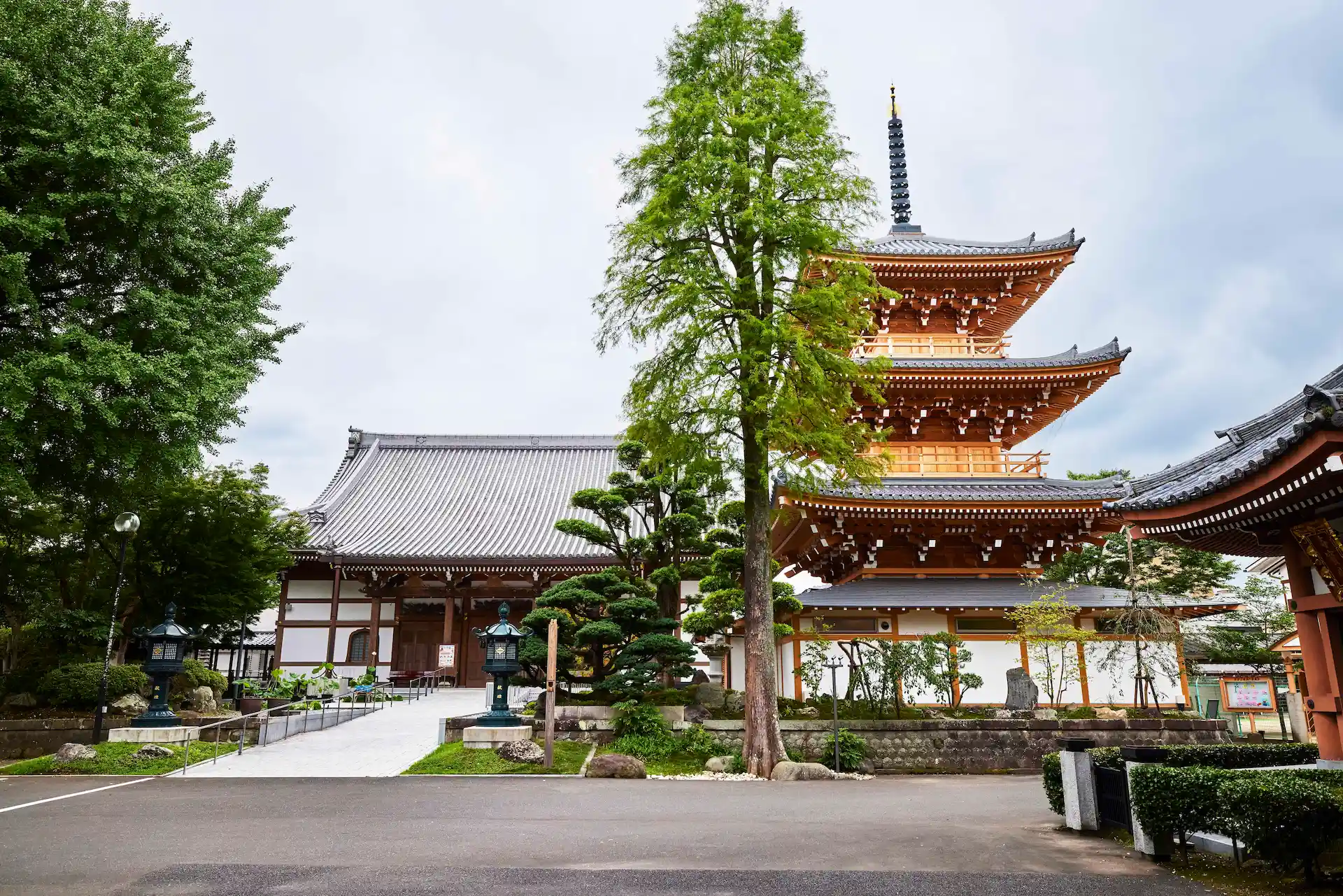
The three-story pagoda was completed this year, and building a new pagoda of this kind is rare today. Its construction incorporates patented technology, resulting in a building that fuses traditional design with modern engineering. When I saw it completed, I was struck by how magnificent it was and felt it would become a symbol of this community.
I wanted people to appreciate its beauty not only during the day but also at night, and I hoped the illumination would encourage more people to discover the pagoda.
―
As soon as you pass through the mountain gate, the magnificent main hall and the three-story pagoda immediately catch your eye. They have a strong presence even during the day, but at night they take on a different character. I felt that the lighting effects on the finial were a particularly key feature of this illumination.
Head Priest
Actually, illuminating the finial wasn’t part of the plan from the start.
Designer Inaba suggested, “The distinctive character of a three-story pagoda can only be fully conveyed when the finial is visible.” So we decided to go with it.
Now, I think the pagoda wouldn’t have looked like a true three-story pagoda without the light on the finial.
The light visible through the mountain gate is also very striking, making the pagoda a prominent feature even from a distance.
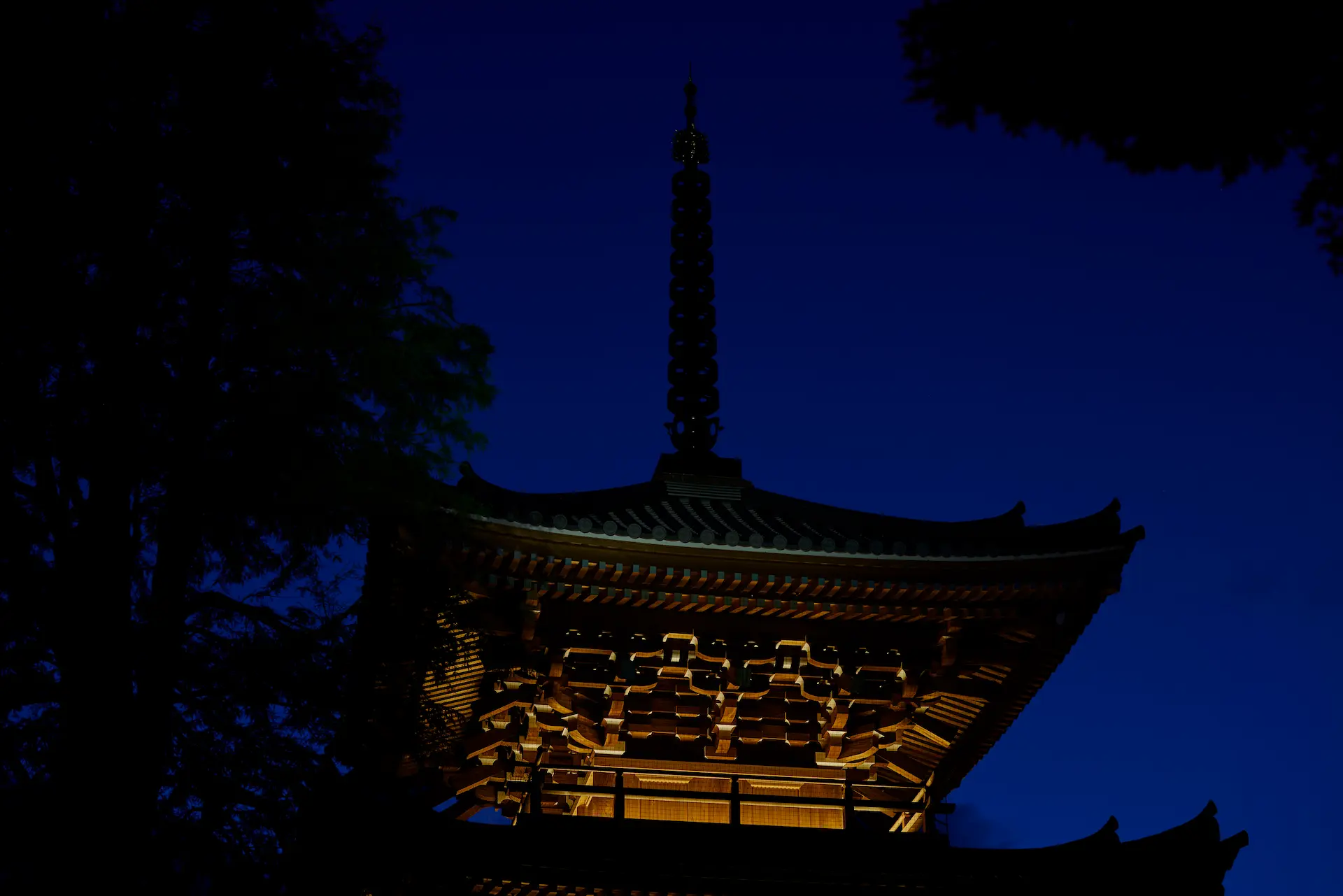
Before the lights were turned on
After the lights were turned on
Head Priest
My first thought was, ‘This is exactly what I would expect from Stanley Electric. Even though the lighting is focused on just specific points, it effectively conveys the height and presence of the three-story pagoda.
People naturally use their imagination to fill in what they cannot see. By illuminating only the essential parts, the entire pagoda appears even more impressive.
In addition, your track record and reputation as a manufacturer of automotive headlights were key factors in our decision to adopt your system.
―
Precisely targeting and illuminating objects to bring out their charm is one of the principles we value most at our company, so I’m very pleased that you felt that way. Have you noticed any changes since the lighting was installed?
Head Priest
During the final adjustments, I saw someone who had nothing to do with the construction project casually walk in, take a photo, and leave. That’s a sight we rarely saw on the temple grounds at night before. People rarely visited the temple grounds after dark, but I feel the temple is gradually becoming a source of light for the community.
―
I had the opportunity to speak with the people involved in the construction and members of the local community, and I was deeply impressed by how everyone cherishes their connections while supporting the three-story pagoda and the temple.
That spirit is gradually beginning to take shape, isn’t it? Finally, could you share your outlook for the future?
Head Priest
We hope to continue with lighting displays that resonate with the community, such as changing the color of the lights for events and observances such as the equinoctial Higan periods. Going forward, we’re also considering lighting up the waterway scheduled to be developed around the temple grounds, as well as incorporating projection mapping.
I’d also like to host events for the children at the adjacent kindergarten.
I want this to be a temple where people can casually drop by 365 days a year, not just a place they visit for memorial services or prayers. The illumination is one of the initiatives supporting that goal.
I’d be delighted if people saw the light on the temple’s finial, wondered, “What is that?” and were inspired to come visit.
We hope to remain a temple that is open and welcoming to the local community.
Mr. Inaba
Since the main body of the three-story pagoda was planned using lighting from a different manufacturer, I first focused on balancing the overall color and brightness so that our lighting would work in harmony with the existing fixtures.
If any area is too bright or too dark, it detracts from the building’s overall appeal, so we made careful adjustments while assessing the structure as a whole.
―
Watching the lighting display in person this time, I noticed that the light shining on the finial naturally drew the eye to the top of the pagoda, making the entire three-story pagoda look even more impressive. How did the decision to illuminate the finial come about?
Mr. Inaba
While considering the lighting design for the entire three-story pagoda, we felt that “illuminating the finial would give the whole structure a more cohesive look.” Since the finial is very small and located far away, it was necessary to illuminate only the targeted area. Stanley Electric offers a detailed lineup of floodlights with narrow-angle beam patterns, so we were able to select the floodlight with the optimal beam angle to suit the on-site conditions. Additionally, because the light had to be projected through gaps in the balustrade, we needed to select compact fixtures.
By guiding the viewer’s gaze to the very top of the pagoda, the presence of the three-story pagoda is further accentuated.
The finial was also an indispensable element in conveying the silhouette characteristic of a three-story pagoda against the night sky.
―
Since the finial is one of the most delicate parts of the structure, I imagine it required a great deal of ingenuity to illuminate the intended spot. Furthermore, during the final adjustments, the appearance changed every time the lights were turned on, and I felt it was extremely delicate work. Could you tell us about the challenges you faced during the design and adjustment phases?
Mr. Inaba
Even when the distance remains the same, the visual impact can change significantly depending on the installation position. Therefore, we conducted simulations using various placement patterns to identify the optimal location.
In addition, we conducted verification tests of these lighting effects using the exterior walls of the Stanley Electric New Technology Research Institute building in Eda, for which our company was responsible for the lighting design. Before the final installation, we were also able to evaluate the light color and visual appearance using demonstration units provided by Stanley Electric. This allowed us to confirm the intended effect in advance and proceed with the project with confidence.
―
This time, you made adjustments while conducting repeated on-site checks. Is there any particular episode that stands out in your memory?
Mr. Inaba
Because the sorin features gold-colored ornamentation, we focused not only on brightness but also on bringing out its natural golden appearance. Initially, the plan was to illuminate the sorin with a single fixture, but a sales representative from Stanley Electric suggested, “It would be better to use two fixtures.”
When we tested the two-fixture setup, the sorin was rendered more clearly and had a much stronger presence.
I feel the result turned out very well.
During this visit, I not only observed the final adjustments to the lighting but also participated in the morning service.
What struck me most was seeing the head priest and others involved in the construction of the three-story pagoda looking up at the completed structure and chatting happily.
During the final adjustments to the lighting, I also saw people who happened to be passing by stop to take photos. Today, the illuminated pagoda and its finial continue to create a welcoming presence along the temple approach after dark.
[Tenryuzan Shogoji Temple]
Address: 2-16 Muta-cho, Miyakonojo City, Miyazaki Prefecture
Sect: Jōdo Shinshū Honganji-ha
[FORLIGHTS Co.,Ltd.]
Address: 4-3-33 Shimo-Ochiai, Shinjuku-ku, Tokyo 161-0033
[Kameyama Construction Co., Ltd.]
Address: Head Office, 1037 Inaguchi, Seki City, Gifu Prefecture 501-3932
[Takano Construction Co., Ltd.]
Address: 1527-1 Hayasuzu-cho, Miyakonojo City, Miyazaki Prefecture 885-0055
LEDSFOCUS Series LEDSFOCUS GOLD
Ultra-narrow-angle LED floodlight / LLF0113A
Achieves a light color that accentuates gold
Application 1: Pinpoint Illumination of the Pagoda Finial
Product Name: LEDSFOCUS GOLD Gold Floodlight / LLF0113A
Number of units: 2; Beam angle: 2.5°
LEDSFOCUS Series LEDSFOCUS PRO
Wide range of variations to meet every need
Application 2: Lighting of the Topmost Tile Roof
Product Name: LEDSFOCUS PRO White Floodlight / LLF0113A
Number of units: 2; Beam angle: 9°