RECOGNIZING
Sensing & Recognizing with Light
Providing advanced sensing and recognition functions by invisible light
Despite how marvelous the human eye is, humans are unable to see objects in the dark.
However, the use of visible or infrared lights can complement the human eye.
Stanley Electric even uses light that is invisible to the human eye to provide more advanced sensing and recognition functions.
- ADB system μLED ADB
- Improved Pedestrian Visibility in the Rain
- Headlamps with integrated sensors
- Granular Surface-Emitting Technology
- LiDAR emitter module
ADB system μLED ADB
Aiming to eliminate night-time fatal accidents, the system provides drivers with maximum visibility while reducing unpleasant glare* for “all traffic participants” including vehicles ahead and oncoming traffic, and also pedestrians.
*The glare phenomenon occurs when the rays of the headlights of one’s car and those of oncoming cars intersect, reflecting each other’s light and making it impossible for the drivers to see what is between them. This is also known as the “evaporation phenomenon” because it disappears as if it evaporated in an instant.
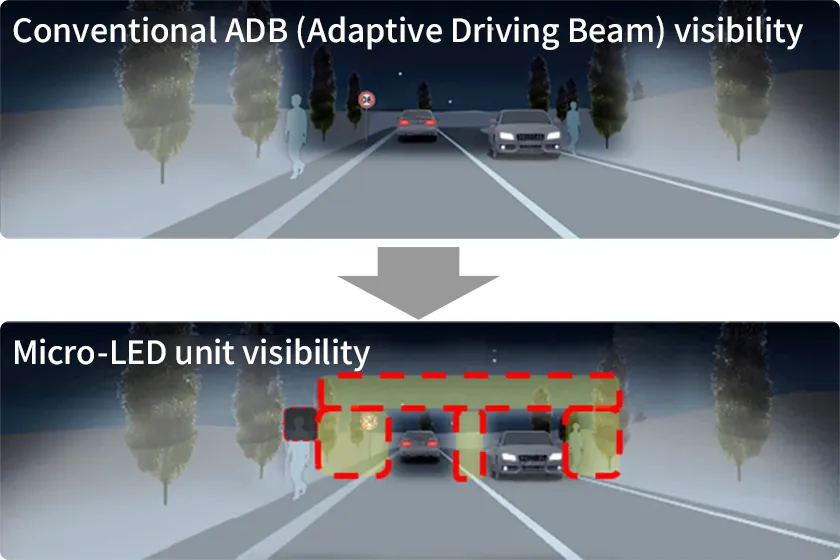
Controlling approximately 20,000 LED lights arranged in a matrix, the system has the following functions.
- Variable speed flux distribution: Provides optimal light distribution for each driving situation.
- Electronic swivel (light moves): Provides light distribution suitable for driving around curves without a motor.
- Vehicle light shielding: Narrow shielding possible with respect to vehicles ahead and oncoming traffic
- High-brightness object/pedestrian dimming: Anti-glare dimming for pedestrians and reflections of high-brightness objects (signs, etc.)
- Animation: Up to approx. 3 seconds of startup animation can be projected when IG-ON (ignition is turned on).
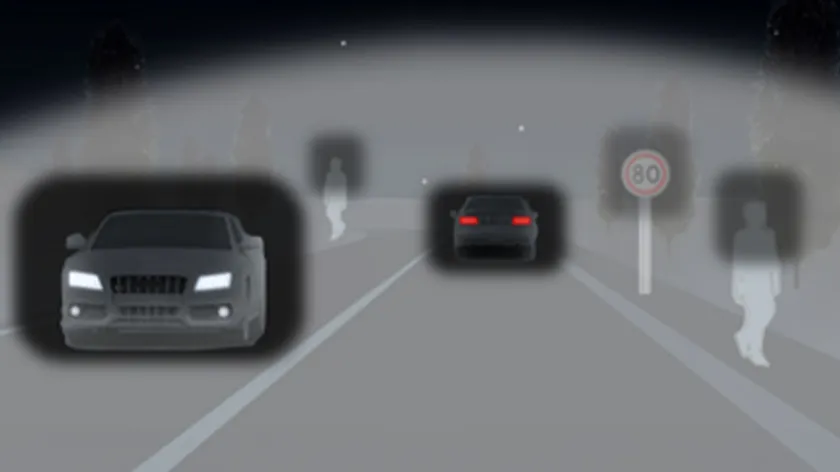
Optimal light distribution based on ergonomics—Improved pedestrian visibility in the rain—
Ergonomics is a research field in which human-friendly machines and systems are designed based on human psychological and physiological characteristics. Stanley Electric places particular emphasis on the ease of visibility of humans and improves lighting technology to deliver safe and secure products.
One specific development example of the use of ergonomics is light distribution at night in bad weather conditions. Analysis of survey/accident data at global sites shows that the visibility of pedestrians on the road shoulder is reduced at night when it is raining, increasing the risk of accidents. In response, our verification at the Light Tunnel Building found that applying contrast between the brightness of pedestrians and the background can improve the visibility of pedestrians on the road shoulder. By utilizing ergonomics in this way, we have created new light distribution control specifications that enable safe and secure driving in the rain.
Ergonomics verification: Visibility of pedestrians along the road at night when it is raining
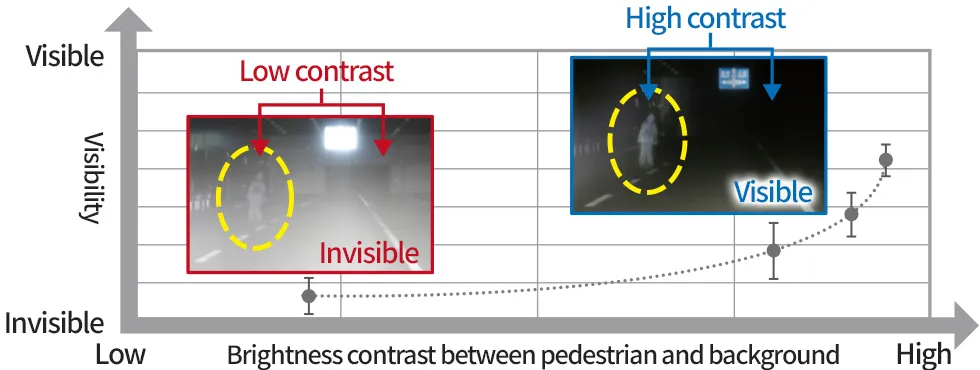
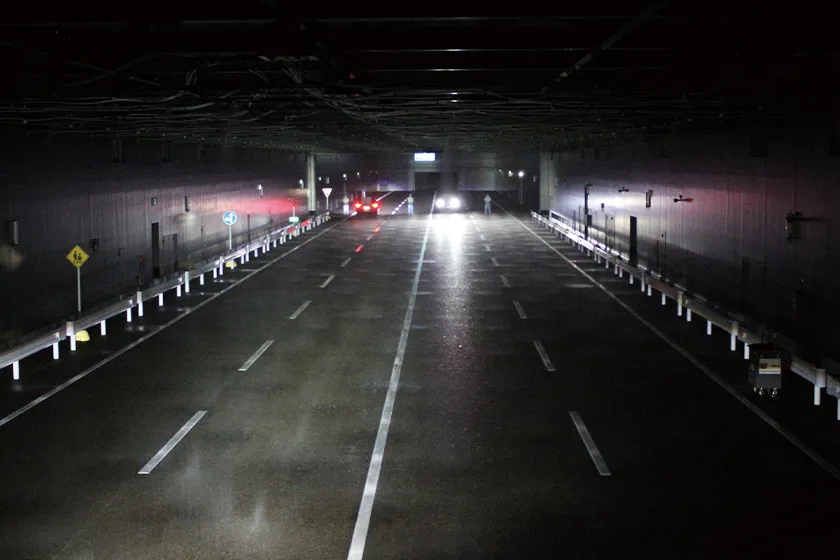
Verification at the Light Tunnel Building
Light Tunnel Building: One of the world’s longest indoor testing facilities, capable of thoroughly reproducing natural environments such as rainfall and dense fog, enabling verification tests on actual vehicles day and night
Headlamps with integrated sensors
Eliminating night-time traffic accidents with a sensing function
Compact light source unit enables headlamps with integrated sensors
By utilizing lamps on the four corners of a vehicle, the sensors integrated into the lamps precisely acquire information on the area surrounding the vehicle. The lamps can produce light that is not too bright for oncoming vehicles, light that enables communication with pedestrians, and light that warns vehicles behind that they are too close. Stanley Electric systematizes the headlamp by using sensors to recognize information and feedback the status of the surrounding environment, people, and objects, thereby providing safe illumination.
Lamp miniaturized to provide space for a sensor
The miniaturization of the lamp provides space for a sensor. Lamps combined with sensors ensure that light is distributed safely.
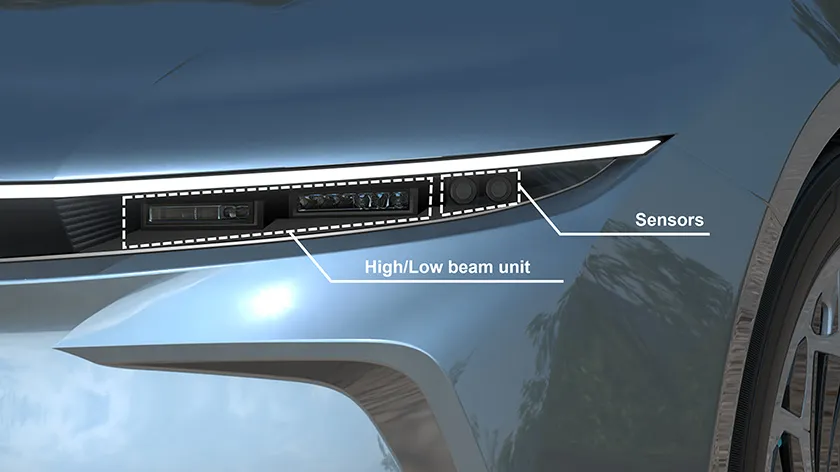
Development of the light source and optical system enabled a vertically narrow high/low beam unit. The miniaturized unit secures the installation space for the sensors required by ADAS functions.
*ADAS: Advanced driver-assistance system
Development of light sources for sensing
Looking ahead to automated driving and more advanced ADAS performance, Stanley Electric develops infrared VCSEL light sources for sensing and MEMS mirror devices for light control in addition to developing headlamp units.
-
-
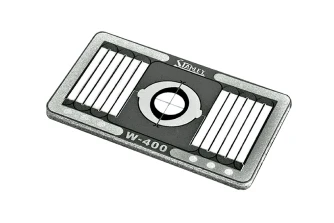
Automotive-grade piezoelectric MEMS mirrors featuring compact size, high-temperature operation, and vibration resistance.
Granular Surface-Emitting Technology
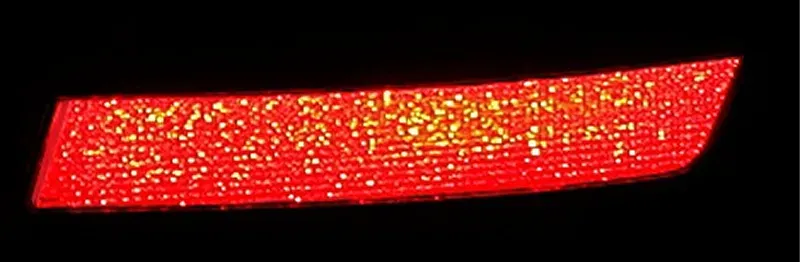
The Granular Surface-Emitting Rear Lamp combines sparkling visual effects with uniform illumination, delivering a unique lighting expression developed by Stanley Electric that offers both distinctive styling and enhanced visibility.
-
Granular Surface Emission -

Conventional Uniform Surface Emission
A Lighting Technology That Enhances Visibility
Granular Surface-Emitting Technology creates a distinctive sparkling appearance through its unique lens design while providing excellent visibility.
Because the appearance of the light changes depending on viewing position and vehicle movement, it is easier to recognize from a distance and helps drivers notice vehicle movement more readily, in addition to enhancing styling.
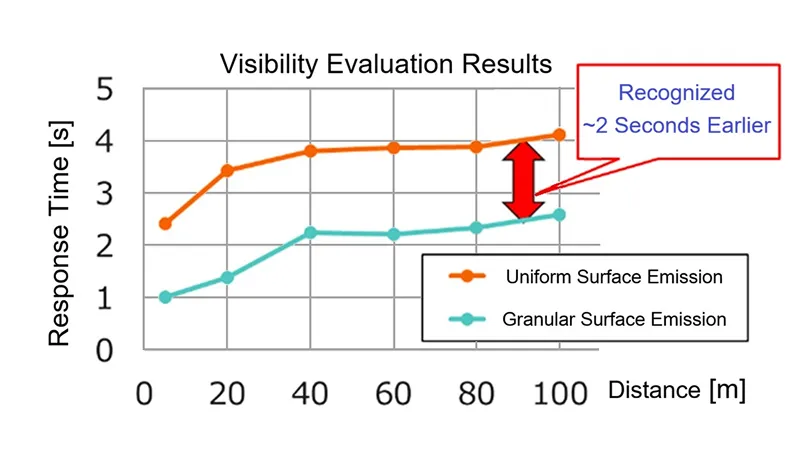
Recognize Vehicle Movement Approximately Two Seconds Earlier
Ergonomic evaluations have confirmed that vehicle movement can be recognized approximately two seconds earlier compared with conventional uniform surface-emitting lamps. The high-luminance granular light points create subtle visual changes depending on viewing position and vehicle movement, making it easier for following drivers to notice the movement of vehicles ahead. By supporting earlier recognition, this technology aims to contribute to reducing rear-end collision risk and improving road safety.
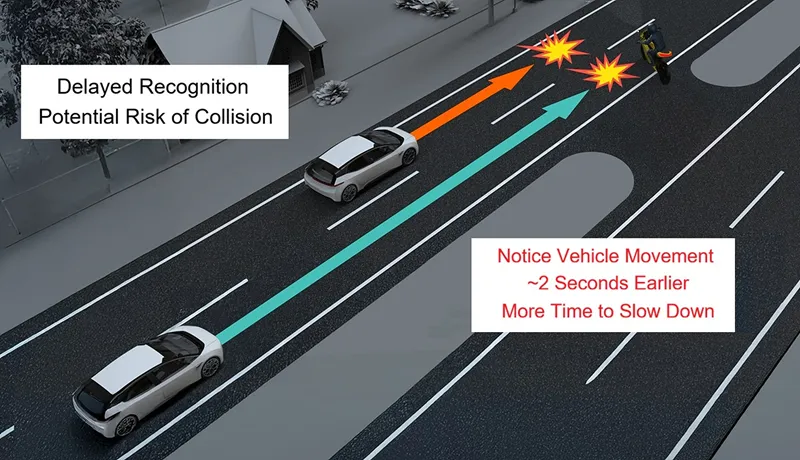
Visibility Evaluation Results
Unique Technology Behind Granular Surface Emission
Through proprietary light-guiding technology, Stanley Electric achieves uniform granular surface emissions up to 1,200 mm in length and 30 mm in height using a single LED.
By optimizing the shape of the light guide and lens design, both a sparkling appearance and uniform illumination are achieved.
-
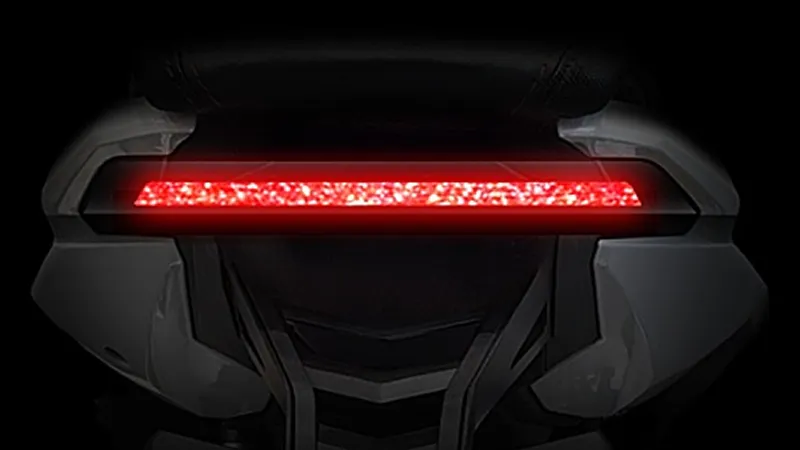
Motorcycle Design Example -
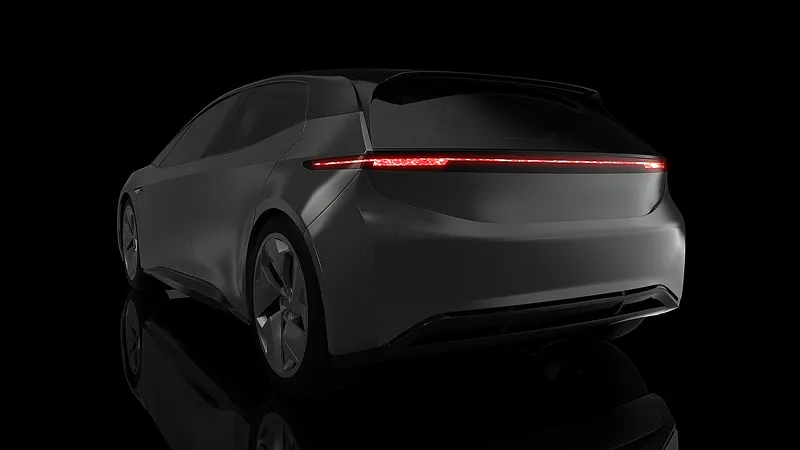
Automotive Design Example
Potential Applications
With its high visibility and distinctive lighting expression, Granular Surface-Emitting technology has the potential to be utilized in a variety of applications beyond automotive lighting, including interior lighting and digital signage.
More About Granular Surface-Emitting Technology
(Press Release: November 18,2025)
LiDAR emitter module
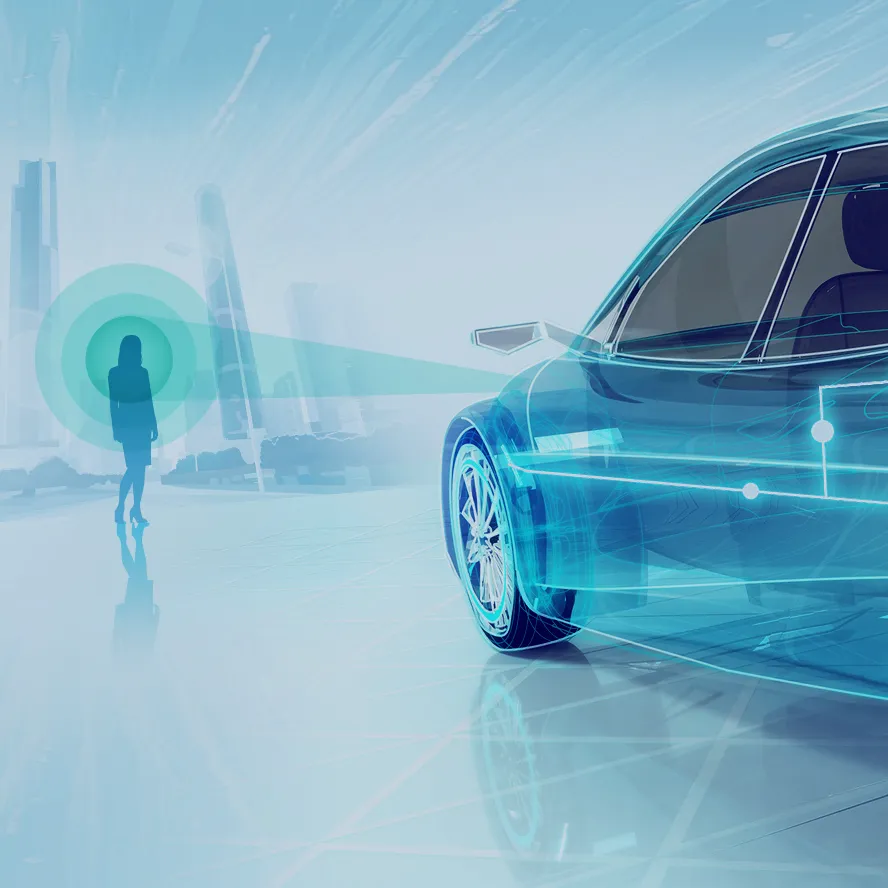
LiDAR sensors, which are essential to the evolution of ADAS, will be mounted on vehicles going forward as systems for detecting humans and obstacles with high precision even over long distances.
Stanley Electric develops infrared VCSEL light source modules for LiDAR.
-
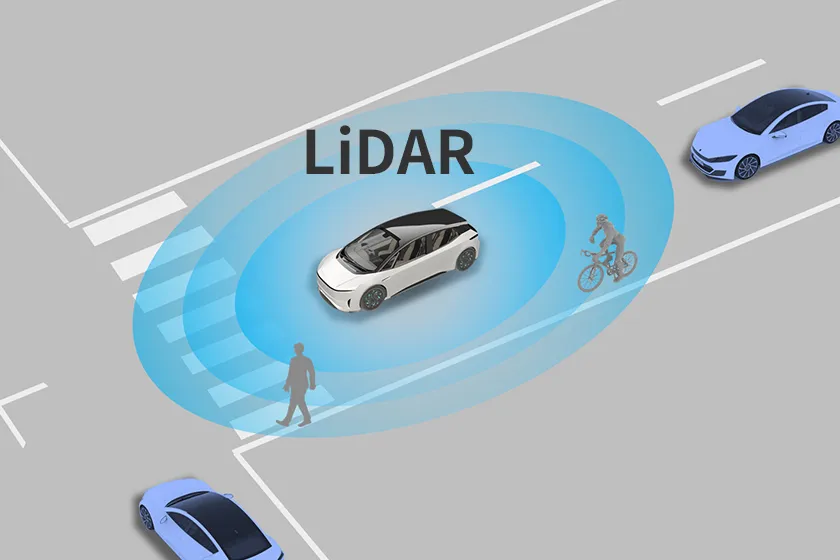
Sensors essential to the evolution of autonomous driving and ADAS
Infrared light detects humans and obstacles with high precision -
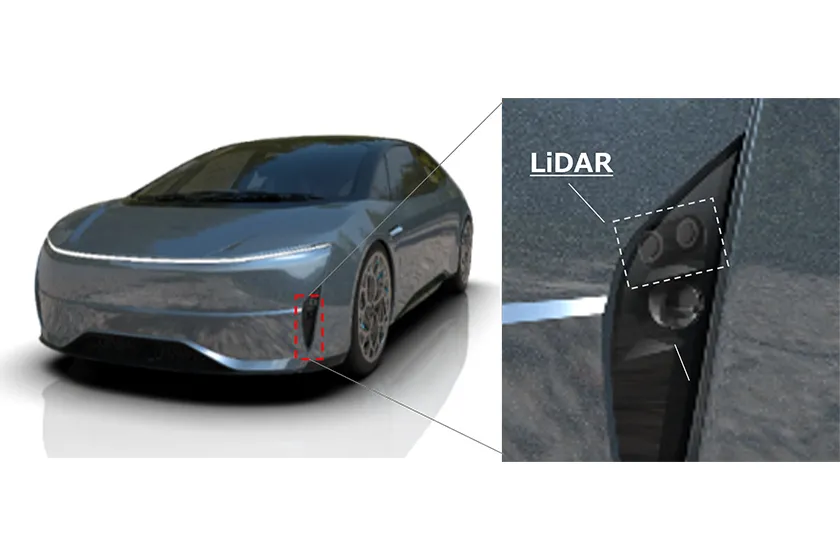
Downsizing the current LiDAR system to enable its integration into exterior lamp spaces
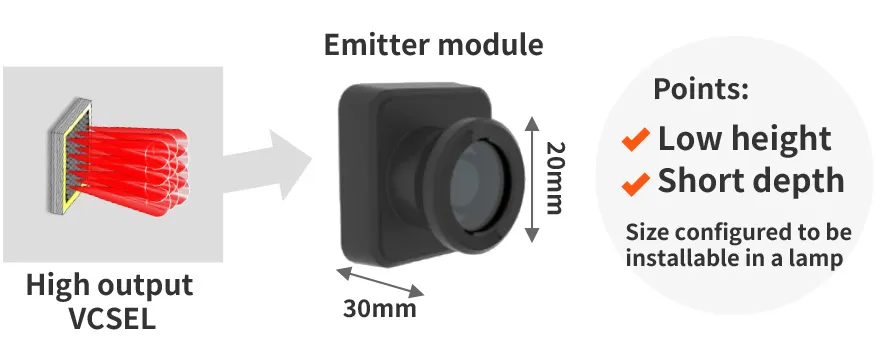
Compact and High-Efficiency Emitter Module
The emitter module, enabled by high-output VCSELs and high-efficiency micro-lens arrays, achieves miniaturization and high performance. It can be integrated into headlamps or other limited exterior lamp spaces.