
Message from the President
Enhancing safety and security through optical technology
I. The value, strengths, and business opportunities of light
Business environment
The automotive market, served by our core Automotive Equipment Business, has long been said to be undergoing a once-in-a-century transformation, symbolized by the term CASE*. Even in this rapidly changing business environment, two major trends— the shift from gasoline vehicles to electric vehicles (EVs) and the pursuit of safer, more reliable cars through autonomous driving—continue to evolve daily, with their associated needs constantly changing. The role of automotive parts suppliers, which for many years focused on supplying products based on automakers’ requirements, has become one where suppliers themselves must consider and propose how their products can contribute to the safety, reliability, and advancement of automobiles.
Over the years, we have explored and mastered the many properties of light to deliver a wide range of valuable products. Just as “when cars move, light moves with them,” light has long been utilized in various fields, but the times surrounding its use are now changing significantly. In a market where values and needs are constantly shifting, we will adapt our products in an agile manner to meet evolving demand. I feel that this approach has become the new normal. For example, while mature automotive markets like Europe, the United States, and Japan tend to favor sophisticated and chic interiors, markets like China and India place greater emphasis on entertainment value, reflecting the growing diversity of people’s perceptions of light.
The competitive landscape for automotive lamps has changed significantly in recent years. Because lamps are critical safety components that also require largescale capital investment, entry barriers are high, and there are only three major domestic suppliers, including Stanley Electric. However, more than 200 emerging lamp suppliers with comparable technical capabilities have risen in China and are now competing fiercely in the global market, bringing the industry to a period of consolidation. The key to success now lies in the ability to deliver high-quality products that combine cost competitiveness with technological strength and innovation at speed, and the market requires close synchronization between manufacturing and product development.
- CASE: Connected, Autonomous, Shared & Service, and Electric
Strengths and business opportunities
A key strength of our company is our ability to develop and manufacture seamlessly across the entire process— from light sources to finished products. With advances in simulation technology and AI making it easier for anyone to handle light sources as electronic components, however, the key going forward will be the intelligence and creativity to determine how to use universally accessible light to create new value. One of our major strengths is our ability to differentiate ourselves through intelligence that integrates ergonomics and optical technology cultivated over many years.
How should light be used to enhance safety and security? What kind of illumination is most acceptable to people? Whether visible or invisible, light can help solve social issues depending on how it is utilized as part of software or hardware.
For example, when I get into a car, it automatically recognizes me and says, “Hello, Mr. Kaizumi.” This happens because the car’s camera system effectively utilizes our LEDs, which emit infrared light. If the vehicle could perform facial recognition to verify the person unlocking it, security would be greatly enhanced. For instance, if the system detected someone other than the owner, it could prevent the engine from starting or require a password. Even if the product itself remains unchanged, a shift in how light is used through intelligence can give rise to an entirely new world. Our ability to create new ways of utilizing light within products from a human-centered perspective is one of our greatest strengths.
Amid demand to commercialize products that leverage our strengths and deliver them to the market quickly, some of our business partners in China and India have explicitly expressed their willingness to serve as testing grounds for our new products. Through a repeated process of trial and error in a short period, we can bring superior products to massive markets. Our company is well-equipped to handle such environments, and the Asian market holds significant growth potential for us.
The same applies to the Americas, including Canada, Mexico, and South America, where there is a strong desire for new types of automobiles. In particular, we are actively investing in the South American market. In October 2024, we acquired Angstrom Electric in Brazil (now Stanley-Angstrom Electric da Amazonia Ltda., or SEA), enabling us to carry out integrated operations from product development to manufacture in the region. While preparing to deliver solid product offerings for the automobile market in the Americas, we are also working to expand in the motorcycle market by leveraging our fast product development speed.
II. Medium-term direction
Fast-paced global challenges
Since assuming the presidency in April 2022, one major change I have made in management is our “One Stanley” approach to competing in the global market. Until then, we had primarily developed products in Japan before rolling them out to the world.
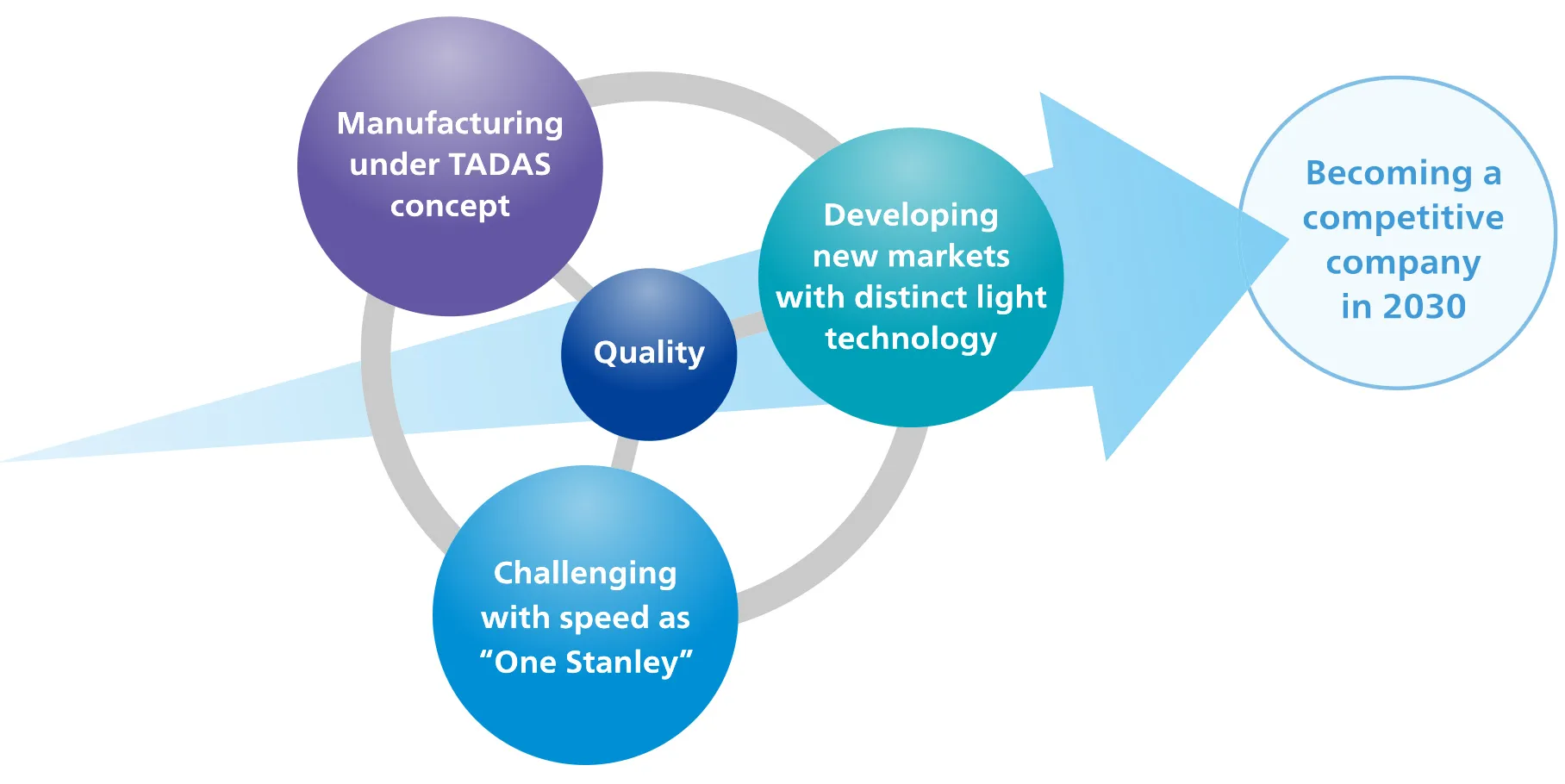
Each market grows in its own way, and market needs are far from uniform. In fact, there are markets where product sales exceed those in Japan by multiple times. Facing this reality head-on, I want to place our relationships with overseas Group companies on an equal footing with those in Japan. With this in mind, we established “Challenging with speed as ‘One Stanley’” as one of the themes of our VIII Three-year Mediumterm Management Plan (VIII MTP). This initiative aims to deliver value not only “from Japan” but also “globally and simultaneously.” It extends beyond development and production to include our accounting systems, which we are restructuring to enable unified global operations and faster financial closing.
Our “One Stanley” approach is already producing significant results. In the field of CAE* simulation, for example, our U.S. operations lead the world in some areas, while our team in Thailand is at the forefront in others. Japan now oversees the Group as a whole, while discussions on global investment strategies for CAE are driven by local engineers in the United States and Thailand.
Since joining the Company, I have spent many years working abroad in places like the United States, Germany, India, and Thailand, and I’ve come to appreciate the abundance of exceptional talent worldwide. In the past, our plant managers in the United States were Japanese employees dispatched from headquarters, but now both factories are led by Americans, and the same trend is emerging in Thailand. We appoint talented local personnel who are well versed in their markets and business practices, encouraging mutual growth while giving them opportunities within the organization. This approach strengthens the One Stanley initiative and enables faster business development that reflects diversifying needs.
- CAE: Computer-Aided Engineering
Medium-term direction of the Automotive Equipment Business
Today, the automotive market is undergoing rapid consolidation in two key areas—safety (centered on ADAS*) and electrification—bringing the lamp system business into a period of major transformation. In addition to lamps, this applies to other products and functions— such as cameras, sensors, brakes, chassis, and energy management systems—that operate interdependently within the vehicle to ensure overall functionality.
As automobiles themselves undergo major transformation, one option for automakers is to assign all lamp design specifications to the vehicle’s main control board and request lamp suppliers only to manufacture products exactly as specified. Instead of merely producing lamps, we have chosen the path of developing and delivering intelligent products that contribute to safety and peace of mind—without causing conflicts within the overall vehicle system. The answer is simple: Our mission is to not simply supply lamps but also deliver products that embody safety and security. We want to be on the side that considers how to ensure safe and secure conditions for drivers and other road users. If we lack certain expertise, we will build the necessary capabilities by partnering with external organizations so that we can prepare and implement them effectively. The formation of a joint venture with Mitsubishi Electric Mobility represents a concrete step toward realizing this vision.
Lamps are still in the process of evolving. In recent years, sudden heavy downpours have become more frequent, yet current autonomous driving systems rely mainly on millimeter-wave radar, which is highly vulnerable to water. During heavy downpours, the reflected water droplets interfere with the millimeter waves, making autonomous driving impossible. Although lamps are critical safety components, current safety standards are based on clear-weather conditions and do not specify requirements for adverse weather, such as rain or snow. If drivers struggle to see clearly in the rain, perhaps our lamps are not doing enough to help. We believe there is more we can do to meet the safety and security needs of all road users, and with this conviction we continue to advance our lamp development.
The same applies to motorcycles. Traditionally, when a rider leans the bike into a turn, the light beam drops toward the near side, making it difficult to see the area ahead of the corner, which is where the rider most needs to see. Sharing the same awareness of these challenges, we have been working with Yamaha Motor Co., Ltd., for about four years to create various test models. This collaboration led to the creation of the world’s first motorcycle ADB that automatically adjusts its light distribution pattern according to the lean angle of the motorcycle. By mass-producing this motorcycle ADB and improving visibility through wider illumination, we seek to help realize a future with zero traffic deaths.
Stanley Electric holds the top global market share for motorcycle lamps and will continue strengthening its efforts going forward. Having started out as a supplier of bulbs for motorcycles, we have always maintained a close relationship with the motorcycle market. Our partnership with Honda Motor Co., Ltd., a leader in motorcycles, served as a springboard for our expansion into the global market. When our customers expanded overseas, particularly in Asia, we built our plants near theirs to ensure the quick and stable supply of lamps, which in turn helped us gain market share in the motorcycle segment. In South America, we aim to establish a solid foundation for our motorcycle business through the acquisition of Angstrom Electric (now SEA) and expand sales by leveraging our product development base and strong relationships with manufacturers. In India, we are strengthening our partnership with Lumax Industries Ltd. to build a fully integrated local framework that covers everything from software development to production. Our aim is to expand orders from both Japanese and Indian manufacturers operating in the region.
Thanks to advances in robotics, we no longer need to build large factories like in the past. Through appropriate investments, we need to establish a framework that enables rapid product supply close to our customers. By strengthening our local development and sales structure and leading motorcycle safety and reliability through advanced technologies, we aim to increase sales of lamps for motorcycles from ¥99.9 billion in FY2024 to ¥150 billion in FY2028.
- ADAS: Advanced Driver-Assistance Systems
Medium-term direction of the electronics business
At the heart of our electronics business is our R&D on light source technologies. For example, while LEDs have become a standard light source, they still have the potential to evolve further depending on how they are controlled. LEDs are often described as eco-friendly because of their low power consumption, but in reality, less than half of the spherical light they emit is effectively utilized, with the rest going unused. If all the light emitted from LEDs could be fully utilized, it would mark the beginning of true energy saving and be a new game changer. By leveraging our strength in optical design to maximize light utilization efficiency, we aim to help resolve global energy challenges.
Through full coordination that integrates both exterior and interior lighting, we aim to create new forms of communication between people and vehicles. By also co-creating the future of urban development through connected and smart streetlights, we will help ensure greater safety, security, and comfort for all road users. In addition, accelerating robotics through advanced sensing technology can help alleviate labor shortages. By developing sensing technologies that meet NCAP*1 safety evaluation standards for new vehicles, we can help create a society where elderly people are neither victims nor causes of traffic accidents.
In light source R&D, it is extremely important to determine what kinds of light sources we will create and deliver in the future. Accordingly, we are focusing on new light source technologies we are co-developing with Kyoto University and NICHIA CORPORATION. In this field, the blue GaN-based PCSEL*2 has evolved dramatically. Thanks to quantum computing technology, the computational capacity has now increased from just 10,000 times per day a decade ago to a 14 trillion times today.
We must not hesitate to invest in these new light sources, and as long as I am president, I intend to continue making such investments. The returns might come beyond the medium term, but we will continue our R&D without slowing down. We would like to create a world where people can enjoy movies in true three-dimensional images.
- NCAP: New Car Assessment Program
- PCSEL: Photonic-Crystal Surface-Emitting Laser
III. Long-term direction
Long-term enhancement of corporate value
In considering corporate value, we have traditionally placed strong emphasis on “profit” as a financial measure. While the importance of financial value will remain unchanged, we recognize the need to also enhance non-financial value in order to raise our overall corporate value. It is my responsibility and role as a business leader to enhance both financial and nonfinancial value and thereby elevate our corporate value. To this end, we are strengthening our management strategy, financial discipline, ESG and sustainability initiatives, talent and organizational capabilities, digital innovation, and brand value. Among these, non-financial value—especially human capital and sustainability— requires a long-term commitment.
In 2024, we defined “self-motivated“ challenge-driven human resources as our HR policy. From my experience, I feel there are many people around the world with the strong drive to take on challenges and become the best globally. I can already see a significant number of “self-motivated” challenge-driven human resources actively succeeding, particularly overseas. I feel the real issue lies in Japan, where a conservative mindset remains common, particularly in upper management. At the same time, I believe many younger employees have the potential to develop into truly “self-motivated“ challenge-driven human resources. To secure top talent, we must enhance the Company’s appeal as a place to work. Accordingly, we are pursuing improvements in both tangible and intangible areas.
Regarding sustainability, we are currently working to re-identify our material issues. This is because we recognized the need to reevaluate our corporate value— including non-financial elements—while redefining our material issues and ensuring that all employees share a heightened awareness of them.
Previously, we had a tendency to focus excessively on financial value, but now there has been a shift in mindset toward emphasizing balance, which includes considering environmental value in investment decision discussions. It might still take some time for the concept of sustainability to permeate throughout the Group. To achieve significant business growth, however, we will refocus our efforts on enhancing all employees’ sustainability awareness as we re-identify our material issues.
To our stakeholders
We have established ROE as one of our most important performance indicators and are working to improve profitability and asset efficiency to achieve our FY2028 ROE target of 10%. At the same time, as a company built on “light,” we remain committed to creating new sources of light to drive breakthrough growth. We will therefore push ahead with investment while working to enhance both profitability and asset efficiency.
We kindly ask our stakeholders for their continued support as we pursue ambitious medium- to long-term growth.
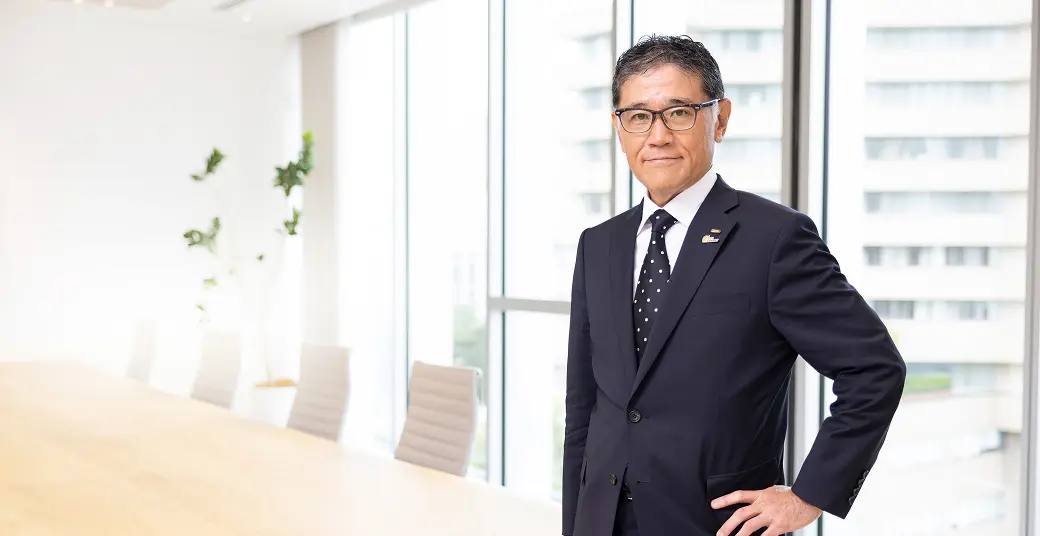
STANLEY ELECTRIC CO., LTD.
President and Representative Director
Yasuaki Kaizumi